Monday, October 25, 2010

How did we end up here? -Kolkata

How did we end up here?

Short version. We were standing at the train station in Darjeeling trying to book tickets to Varanasi and we informed that there were restrictions in place on trains from Siligory ( near Darjeeling) to Varanasi, and all other trains to locations nearby or on the same route as Varanasi were sold out ! A very quick decision was made to head to Kolkata first and book a train from there to Varanasi, onto Agra and then Delhi. We hadn’t yet had the pleasure of experiencing a long distance Indian train ride at this point so were quite positively naive about the experience and the cheap prices - a mere 600 rupees each $20! WOW a bargain! It is very true you always get what you pay for and this was no exception to the rule! Thankfully the first train ride which was Sleeper, AC class ( Air Conditioning) twice the price was bearable -JUST! Little did we know how basic even this class would be and what was installed for us in the lower class seats !

Another plan unfolded and in a matter of 1 hour all the tickets were pre-booked - oh what a journey we were about to embark upon ! Surely Indian trains would be more comfortable than Turkish night buses?????

The inside and outside view of the trains ( the class we obtained tickets for)

There are carriages for women, military, 1st and 2nd class and sleepers, people carrying produce or animals , and general- people crushed together standing room only and people hanging out the doors- literally!

Beggars work the platforms when you stop at stations or they board the train seeking money by sweeping the floor around you with their clothes to performing gymnastics up and down the narrow isles. They also search the cubicles for food left by travellers .

You get allocated a seat number in certain classes and then you have to move everyone out who is 'minding ' the seat for you. I awoke in the middle of the night , sleeping on the bottom tier ( three tiered sleeper) to step on a man who had fallen off the top sleeper in his semi drunken state.

Toilets- squat and a few european empty directly onto the railway tracks and all rubbish - plastic cups from drinks of chai , tin foil from the food trays ,to bottles are thrown out of the window onto the track. I could not participate in this 'cultural practice' even with encouragement from locals who were giving me permission or willing to do it on my behalf!

Darjeeling Himalayan Railway


This miniature steam train which you can enjoy a 1-2 leisure ride on through the mountains, villages passing by homes and shops , within meters of their frontage , is also the one means of travel to Siligory from Darjeeling. For this pleasure you can ride on the train at a very slow speed for the short time 6 plus hours! ( 77kms). You would have to be a train nut to do this as we are not !

We opted for the jeep with 15 others squashed inside , which took 3 ½ hours to complete the 77 km "on/off road" journey as it much more thrill seeking. Adventure tourism India ! You pay huge money in NZ to live life on the edge and go 4 wheel driving. We do it for less than 100 rupees in India !

Fresh Produce in Darjeeling!

Fresh fish!. No flies here...we hope!

Hand scales are used to weigh all produce.


Goat meat is very popular, even the head!

Saturday, October 23, 2010

Tibetan Refugee Self-Help Centre


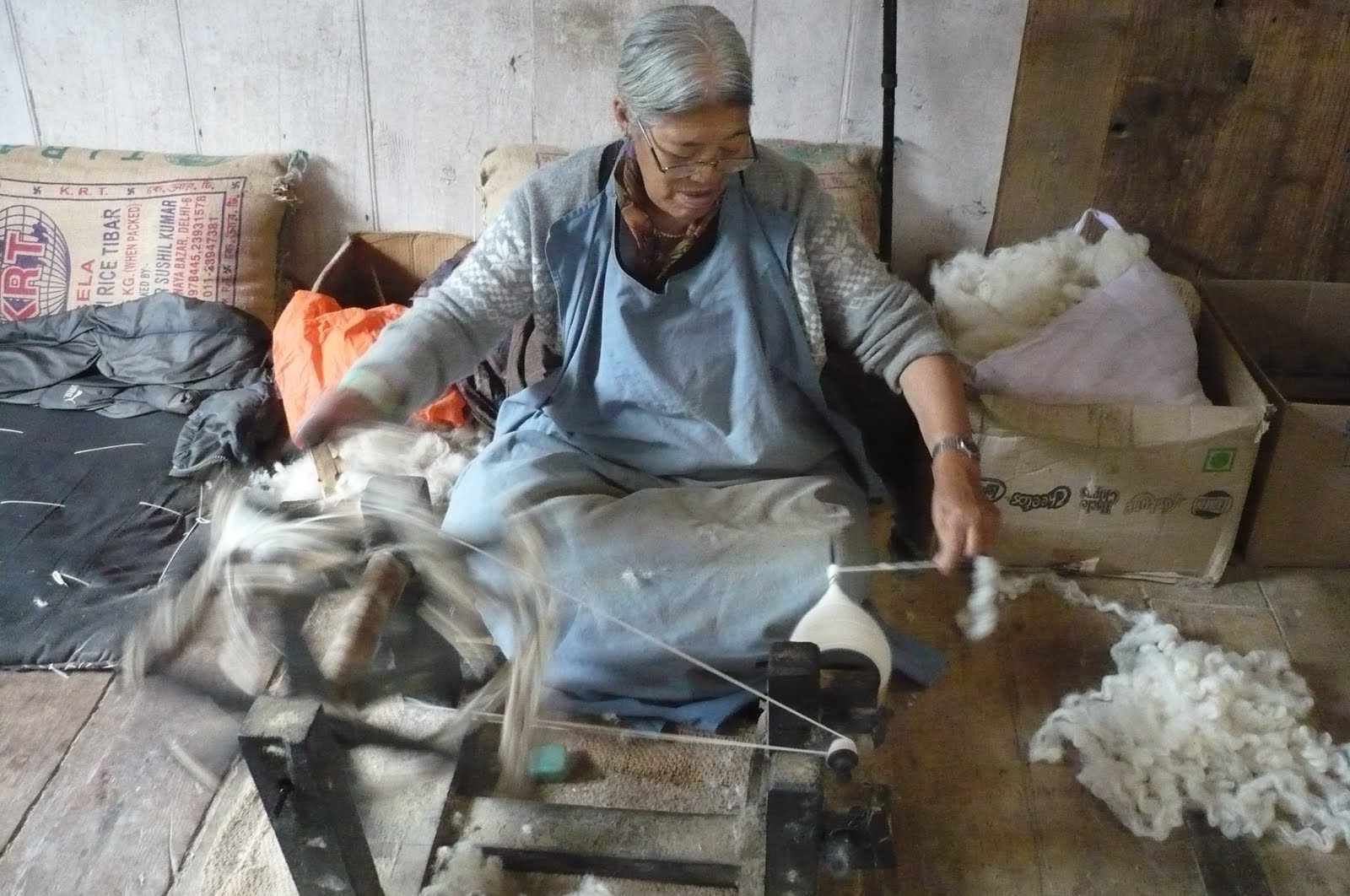
Spinning ( above )

Sewing Tibetan dolls , pin cushions and garments ( below)


Tibetan Carpet weaving factory.

The was established in 1959 following the Chinese takeover of Tibet when many Tibetan people were forced to flee their own country, including the Dali Lama, as his beliefs about freedom were not in line with Chinese communist thinking .

The centre consists of an orphanage , craft workshops, centre for the aged and infirm, and a clinic. Many refugees have since transitioned from the centre to paid employment or self employment.

Workshops consists of tailoring, weaving, spinning, knitting, leather work , handmade Tibetan dolls and pin cushions to name a few .

The main industry appeared to be making Tibetan rugs which there are orders for up until 2011.

All proceeds purchased at the centre shop go back to the refugees and maintaining the centre .

There was a photographic exhibition from when the centre first opened which depicted some very real scenes of the hardships that these displaced people have endured due to the Chinese.


Anyone for Tea? Happy Valley - Tea in Darjeeling

Happy Valley Tea plantation
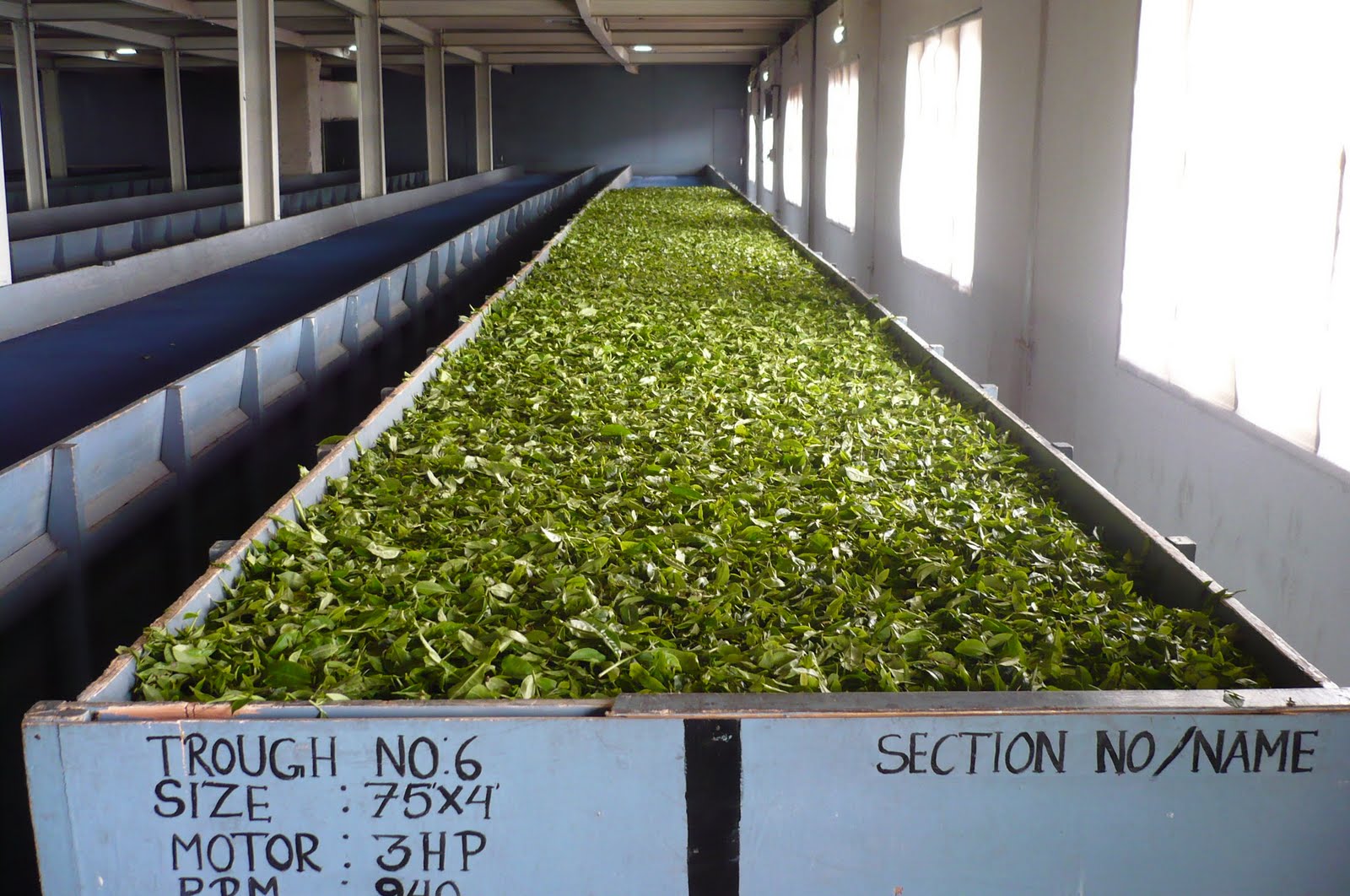
The first stage of tea drying


The final packing: All the remains swept of the floor go into tea bags

Tea Plantations- Happy Valley

After a long walk down to the plantation we paid a guide to talk us through the tea making process from plucking, aeration, rolling, drying , sifting to bagging. We learned about the different grades and quality . White, black, green , exotic to the scraps used for tea bags. The guide emphasized that it is a crime to put milk and sugar is premium tea! It is like watering down wine.

The workers, women, depending on age and marital status are expected to pick a certain amount ( see photo of blackboard) and paid accordingly. Health benefits ,housing and meals are included in the ‘salary package’.
The next day we enjoyed some tea tasting at a local tea shop. The exotic most expensive tea was served in brandy glasses, had a stronger smell and was dark when compared to the premium .to make a comparison related to quality and service, you pay as little as 5 rupees for tea at street side stalls to 15-30 rupees at the food places , we paid over 200 rupees for 2 small pots of tea! Expensive by Darjeeling standards but only about $7.00 NZ

Tiger Hill


Mountain Views – Tiger Hill.

We set the alarm for 3.45 am , at 4.30 walked down the hill to the jeeps and caught a jeep with 8 others, and hundreds of other jeeps following in procession , up to the top of Tiger Hill to watch the sunrise over the Himalayan Khangchendzonga range.

A bit of jostling for position to get a view. We bought tickets for the first level of the pavilion lounge where we situated ourselves on the balcony in the cold..waiting .. times like this I wish I had a really good camera. Everest could be seen, just , as a dot on the landscape to the west is the of this spectacular range.

When we returned we headed for a street cafe and sat on a wooden bench drinking sweet milky tea and coffee and eating egg buns with chilli. 4 drinks and 2 buns cost 60 rupees, cheap breakfast for us considering at some place we have paid as much as 250 rupees.

Darjeeling -9.10.2010

Our accommodation- hot water, white sheets and a European toilet after 6 weeks!
In the Tea Gardens
Tenzing Norgay climbing rock.

Darjeeling, in West Bengal ( India) is spread over a steep mountain ridge surrounded by tea gardens , with a backdrop of a jagged white Himalayan range, Khangchendzonga.

It was originally part Sikkim ( India) , then invaded by the Gurkhas of Nepal followed by the British ( East Indian Trading company ) who returned it to Sikkim retaining a lease on the uninhabited land. There was an influx of Gurkhas from Nepal to work in the tea plantations as labourers . After independence the Gurkhas’s became the main political force and today there are frictions between them and the state government which has lead to a movement which calls for a separate state- Gorkhaland.